Posted on — Leave a comment

London Caffs and a certain dour glamour

London Caffs-Edwin Heathcote-Sue Barr-Wiley-Academy-Afterhours Sleaze and Dignity-2

There is a certain, very British understated (dour?) glamour and sense of kitchen sink-esque escapism to a proper cafe. Greasy spoon sounds derogative but essentially that’s what I’m thinking of – your well-kept, well run greasy spoon cafe.

Along such lines; Edwin Heathcoate and Sue Barr’s London Caffs book is a collection of formal photographic portraits and text overview of such cafes.

The books feels like a time capsule, a recording of establishments that have stood against the march of time;  formica, tiling and silvered hot water geysers resoluteness.

In and around London’s Soho you used to find (and still occasionally find) such places – often they had a sense of deep rootedness, that their Mediterranean owners had been running them as a family business for more than a generation or two.

Looking through London Caffs recently, the pages seem to open of their own accord to a cafe where the light was a little more golden, the magic a little more present.

London Caffs-Edwin Heathcote-Sue Barr-Wiley-Academy-Afterhours Sleaze and Dignity

Not unsurprisingly, this was The New Picadilly, the art house of such things. I use that phrase as these cafes, their rituals, ambience and so forth could represent a certain kind of folk art.

There is / was a sense of pride to the workmanship of running good cafes along these lines, a certain artistry.

Sometimes such leanings would be more pronounced, more overt than in other cafes. Soho and its nearby environs seemed to house a number of these, classic cafes as it were and The New Picadilly was one such place.

Here (and inside other similar fellow travellers) that workmanship / artistry stepped over into a particular kind of flamboyance or showmanship, an obdurate tradition or ritualism to how your cup of tea and slices of bread and butter would be prepared, served and bantered amongst.

It is now gone, departed under the feet of progress. Which brings me back to the London Caffs book and the sense of it being a historic snapshot.

This was pertinent when the book was published in 2004 and I suspect even more so now as an increasing number of such traditional cafes and their ways have disappeared.

Visit traces of The New Picadilly at Classic Cafes here (which is also home to a not dissimilar book by Adrian Maddox and a fine resource on such things).

Peruse London Caffs here.


Posted on — Leave a comment

Tom Waits Small Change (and a possible pre-Mistress Of The Dark)

Tom Waits-Small Change-Elvira-Afterhours Sleaze and Dignity

This photo from the cover of Tom Waits Small Change album I think captures a certain something just about right – a kind of dissolute, lowlife, in the gutter, earlyhours of the morning, when did my life disappear off the end of a barstool-ness.

It has Mr Tom Waits in fine boho/hobo fettle and quite possibly the future Elvira-Mistress Of The Dark Cassandra Peterson.

I say quite possibly because the lady herself has this to say on the subject:

“I’ve stared at it really, really hard, and I’m pretty sure it’s me” and attributes such not quite sure-ness to something of a life lived during the 1970s.

Anyways, Mr Tom Waits, a tip of the hat to you sir.


PS A couple of escapee outtakes from the above mentioned shoot, that I’ve only recently stumbled upon:

Tom Waits-Small Change-Elvira-Afterhours Sleaze and Dignity-out take-2 Tom Waits-Small Change-Elvira-Afterhours Sleaze and Dignity-out take 2Peruse the album here.


Posted on — Leave a comment

Thomas Allen – Uncovered and recreations of imaginings…

Thomas Allen-Uncovered-Aperture Foundation books-pulp fiction-noir-Afterhours Sleaze and Dignity-4

Around these parts, I have something of a soft spot for work/subculture that reimagines its source material – reinterpreting it to create new narratives.

Along which lines, the work of Thomas Allen in which he takes vintage pulp fiction paperback covers and creates his own one frame films.

Technically, I suppose they could be called dioramas but I use the word film as they do seem like momentary snapshots from imagined films – when I look at them, my mind seems to know that the characters within these scenes have a wider story, that each image is but one cell in a reel.

Thomas Allen-Uncovered-Aperture Foundation books-pulp fiction-noir-Afterhours Sleaze and Dignity

His work may well help that process by playing with noir, pulp and vintage archetypes, signposting the way towards known and sometimes well-travelled storylines and backstories (in a way that reminds me of the pin-up noir illustrations of Niagra).

Thomas Allen-Uncovered-Aperture Foundation books-pulp fiction-noir-Afterhours Sleaze and Dignity-2

There is a dreamlike quality to his work – something that seems to be emphasised by the way it often uses a narrow depth of field. This blurred, part focused manner of presentation seems to engender a sense that these are scenes from some half-sleep, half-remembered, half-awake moment.

There is also a surprising visceralness to the Uncovered work. Although that maybe shouldn’t be all that surprising as his source material comes from a market where books were sold via their salacious covers.

However, his work takes that somewhere else, somewhere that may be a little (or more than a little) darker, leaving the viewer with a sense that these aren’t moments in time that are always comfortable viewing. Noirish in the sense of unredeemable characters and situations as well as in an aesthetic manner.

Thomas Allen-Uncovered-Aperture Foundation books-pulp fiction-noir-Afterhours Sleaze and Dignity-3Uncovered was published by Aperture in 2007, visit it there here. Visit Thomas Allen here. Peruse the book here.

Preview the book further at the rather fine and resource filled photoeye here.


Posted on — Leave a comment

From Dives To Dames: Hell Is A City – A Northern British noir

Hell Is A City-1960-Stanley Baker-British noir-Afterhours Sleaze and Dignity-DVD box“FROM DIVES TO DAMES… FROM DARK TO DAWN…”

Hell Is A City-1960-Stanley Baker-British noir-Afterhours Sleaze and Dignity-posterHell Is A City… a rare example of a film that took Hollywood noir and aesthetics and created/recreated them not only in the UK but also in the North of the country (at a time, 1960, when most films took the South of the country/somewhere indefinable as their locale and just pre/concurrent with the kitchen sink/Taste Of Honey/Saturday Night Sunday Morning etc New Wave of British film).

It features Mr Stanley Baker at his hard northern finest and has some quite frankly astonishing, other world and time scenes of unlicensed gambling that take place in the Northern countryside; all cloth caps and penny throwing – a fine capturing of a very specific geographic, cultural and historic point in time…

…and if memory serves me correctly, an end sequence of driving through the night that is pure LA Noir but… well, over here.

Well worth an hour or two of your time.

Below is part of the pressbook, as has been mentioned around these parts before, always something of a favourite to find.Hell Is A City-1960-Stanley Baker-British noir-Afterhours Sleaze and Dignity-logo

More details on the DVD release at Mondo Esoterica and Studio Canal.

Peruse the film here.


Posted on — Leave a comment

Oliver Sieber – Imaginary Club and dreams of the past…

Oliver Sieber-Imaginary Club-GwinZegal-BöhmKobayashi-Afterhours Sleaze and Dignity-2I think I first came across Oliver Sieber’s work via an exhibition of his called Skinsmodsteds and One Punk at The Photographer’s Gallery back in 2002, which was shown at the same time as documenter of 1950s rock’n’roll reinterpreters Karlheinz Weinberger’s work.

At The Photographer’s Gallery site it says this about Oliver Sieber exhibition:

“Where Karlheinz Weinberger’s irreverent teens, showing in the gallery at No. 8, dreamed of a different future for themselves, Oliver Sieber’s latter day sub-culturalists seem to dream about a different past.”

Which made me think about looking for utopias in the modern world.

In times gone by society seemed to look to some imagined future, a world filled with blinking computers, every day luxuries, easy and fast mass transportation, miniature communication devices, hermetically sealed homes controlled by the aforementioned computers and so forth. A kind of populuxe-esque vision of the future.

In the modern world, in the West at least, much of that has come to pass, albeit in a more day-to-day, less overtly grand or futuristic manner.

All of which made me think of the concept of hauntology and the idea “that society after the end of history will begin to orient itself towards ideas and aesthetics that are thought of as rustic, bizarre or “old-timey”; that is, towards the “ghost” of the past.”

Which to a certain degree seems to have happened; sometimes overtly with the ongoing popularity of vintage / retro / burlesque etc culture, sometimes less overtly whereby chart topping acts are essentially retro recreationists, though not marketed directly as so.

Oliver Sieber-Imaginary Club-GwinZegal-BöhmKobayashi-Afterhours Sleaze and DignityMaybe now, without strong utopian visions of possible futures and paths, a visionary, idealised or recreated past has become a place where subcultures and post-industrial society goes to dream (to paraphrase William Gibson).

All of which brings me back to Oliver Sieber.

In his 2013 book Imaginary Club, a vast array of subcultures are represented, intermingling in a, well, imaginary club.

There are two photographs in particular that I’m drawn to, one particular subcultural corner of the club; the vaguely workwear 1950s-esque cover image and a sort of reinvented neo-rockabilly – the second of which in particular puts me in mind of and seems to draw a circle that heads back towards Karlheinz Weinberger’s rock’n’rollers who had recreated their source material as though they’d only heard it via an out of tune radio (to paraphrase myself paraphrasing somebody else).

Visit the Skinsmodsteds and One Punk exhibition here. Visit Oliver Sieber and a considerable preview of Imaginary Club here and at the books co-publisher GwinZegal here.

Visit Karlheinz Weinberger at Afterhours here (amongst other places around these parts).


Posted on — Leave a comment

Cathi Unsworth’s The Not Knowing and connections to the music and work of certain suave gents from back in the day…

0008-The-Not-Knowing-Cathi-Unsworth-Afterhours-Sleaze-and-Dignity-1Well, while we’re on the subject of Tindersticks and Stuart Staples (I may well say “while we’re on the subject of…” a fair few times around these parts as much of the world and work I’m wandering about, via and through are interconnected in curious and intriguing ways)…

…here’s the first novel by Ms Cathi Unsworth. In terms of genre, I suppose the nearest area I would point you towards is a form of contemporary London crime noir…

… but I think in part what fascinates me about it and drew me to it was that it was also a document of a particular time in old London town, just before Britpop. A time when Gallon Drunk and a new breed of one-over-the-eight, slicked back, sharp-suited rock’n’roll was around and indeed appearing in elements of the music press (something Ms Unsworth had a hand in but more of that another time) and occasionally even the visual airwaves.

This was a music and style that in part looked back towards a reimagined 1950s / early 1960s past but wasn’t a bobby socks recreation but a new set of work unto itself, that at its peak could be the soundtrack to a rip-roaring ride of recklessness through the heart of town.

The Tindersticks connection? The title was “borrowed” from the title of one of their songs on their first album.

Actually, while we’re on the subject of The Not Knowing, I’ve always meant to ask Ms Unsworth if that’s her on the cover as the lady in question has a sartorial style not dissimilar to her own.

Around that time of rock’n’roll re-imagining in which the book is set, Ms Unsworth was also heavily involved with a magazine called Purr. Something of a rarity now but if Harry Crews, The Cramps, Derek Raymond, Barry Adamson and James Ellroy float your boat, then this is well worth adding to your ballast.

0008-Purr-Magazine-Harry-Crews-Afterhours-Sleaze-and-Dignity10008-Purr-Magazine-Barry-Adamson-Afterhours-Sleaze-and-Dignity-copy0008-Purr-Magazine-Derek-Raymond-James-Elroy-Afterhours-Sleaze-and-Dignity1

Actually, thinking about it, invite those folks around for some cultural nourishment and you’re not a million miles away from some of the roots of The Not Knowing.

Ms Cathi Unsworth’s site is here. Peruse The Not Knowing and her other published fiction work here.

 

Posted on — Leave a comment

Jacques Olivar – Forever Young and ingrained mythology from over the seas…

Jacques Olivar-Forever Young-teNeues-Afterhours Sleaze and Dignity-3

My own Afterhours work draws in part from a longstanding mythology of a golden age folklore of Soho-esque shennanigans; a layered history found down hidden sidestreets, in the red-lit basements of unlicensed speakeasies and jazz allnighters.

If I was to cast an eye over the seas to the US of A for a comparable deeply ingrained mythology, I think I would probably look towards the stories of the Deep South, a certain gothic Americana or maybe towards the not too far removed overlooked and marginal world of dusty forgotten towns, roadside motels and diners.

Jacques Olivar-Forever Young-teNeues-Afterhours Sleaze and Dignity

Along which lines, I have been drawn to Jacques Olivar’s work, which takes that overlooked world as its locale, creating a youth filled, hyper-real, sometimes populuxe-esque vision and version of it, one with high-end fashion production values and gloss but which still contains a certain grit and the intertwined narrative of its homeland locale and stories.

There is an imagined, filmic quality to the photographs; they could be stills from or fully realised storyboards for a celluloid tale.

Jacques Olivar-Forever Young-teNeues-Afterhours Sleaze and Dignity-2


Along which lines, his works can put me in mind of Wim Wenders and Sam Shepard’s fine, moving 2005 film Don’t Come Knocking – which is set in just such a faded American town, one coloured with a certain velvet, neon-lit rock’n’roll here and there – but as re-shot by Erwin Olaf (see here at Afterhours).

Jacques Olivar-Forever Young-teNeues-Afterhours Sleaze and Dignity-4

The stories of Jacques Olivars have been collected in a book, Forever Young, published by teNeues. Visit that here and peruse it here.

View the trailer to Don’t Come Knocking here, background on the film here and peruse it here.

Visit Jacques Olivar in the ether here.


Posted on — Leave a comment

China Town, neo-noir creations and edited ephemera…

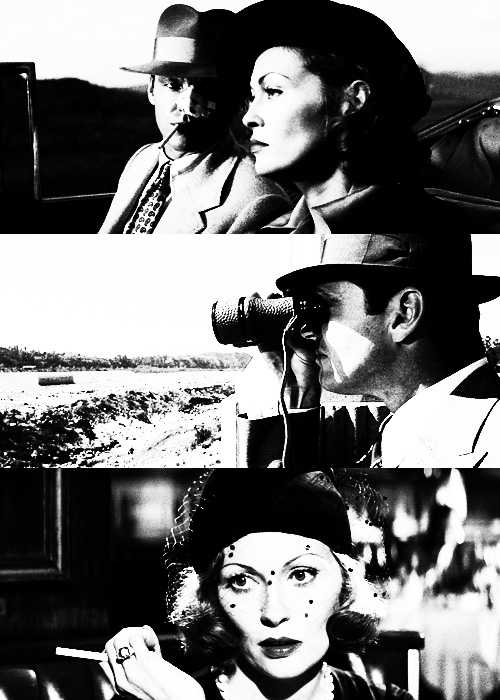
Chinatown-1974-Roman Polanski-Jack Nicholson-Faye Dunaway-neo noir-8mm-Afterhour Sleaze and DignityWhen I was heading towards this first public year of Afterhours, I took a visit and a re-visit to various film favourites and a number of neo-noirs; in particular The Big Sleep (1978), Farewell My Lovely (1975) and China Town (1974).

The first two spring in one way or another from the pen of Raymond Chandler… the third is a fellow brethren in all but actuality. I don’t know if it’s right to call it a homage – this isn’t a nuance for nuance retread and recreation, it is its own story and creation…

A lovely looking film, in particular Mr Nicholson and Ms Dunaway; Mr Nicholson was heading towards 40 when it was made but looks almost impossibly young in a way, Ms Dunaway was in her early 30s but seems far older somehow – possibly a reflection of the trials of her character’s life.

Chinatown-1974-Roman Polanski-Jack Nicholson-Faye Dunaway-neo noir-film poster-Afterhour Sleaze and Dignity Chinatown-1974-Roman Polanski-Jack Nicholson-Faye Dunaway-neo noir-Barrio Chino film poster-Afterhour Sleaze and DignityChinatown-1974-Roman Polanski-Jack Nicholson-Faye Dunaway-neo noir-Afterhour Sleaze and Dignity

On this page are a few related images and ephemera that have caught my eye since re-viewing the film; in particular the Super 8 version.

I like the way that pre the ubiquity of video recorders, such versions were the only way that films could be shown at home.

The box says it is a “SELECTED SCENE EDITION” and I think it would have run for about 11 to 17 minutes, which as the actual film runs for 131 minutes, well, that’s quite a selected scene version indeed.

Peruse the film here.


Posted on — Leave a comment

Jennifer Greenburg’s Rockabillies and the occasional flickering frames amongst a high definition past

Jennifer Greenburg-Rockabillies-Center for American Places books-Afterhours Sleaze and Dignity-3

Often, when I think of subcultures I tend to veer towards nightlife activity and I think in general the word is quite closely associated with youth and youthful lifestyles.

This is one of the things that makes Jennifer Greenburg’s Rockabillies book interesting: it is a photographic consideration of those who subscribe to a particular subculture and style generally post the first flush of youth, often in domestic settings and with “grown-up” life accoutrements and signifiers.

Jennifer Greenburg-Rockabillies-Center for American Places books-Afterhours Sleaze and Dignity-1

In Rockabillies kitchen towel sits next to a photograph of Elvis in the kitchen, proud parents hold their child next to their from back-in-the-day automobile, period detail lives picture perfectly amongst family life and the well honed quiffs.

Jennifer Greenburg-Rockabillies-Center for American Places books-Afterhours Sleaze and Dignity-2

On first glance the photographs seem to present an idealised, seamless recreation of times gone by; it is on closer, second and third inspection that the modern world can be seen through the cracks, the occasional frame flickering briefly amongst the whole film reel.

They are only occasional visitors in these highly curated, high definition selecting from the past homes and lives: the period television stood on an Ikea-esque media stand, the modern television quietly peering out from its new home in a vintage wooden case, a contemporary soft-drink held in the perfectly upholstered and kept interior of a Pink Ladies glamour car interior, a once taboo leg tattoo next to the lovingly kept sofa, a latter day Johnny Cash CD and accompanying player.

Jennifer Greenburg-Rockabillies-Center for American Places books-Afterhours Sleaze and Dignity-4

Interestingly, although I expect that cars and homes have had something of a brush and scrub up in preparation for the photographs and considering the vintage age of many of the items that can be seen in these homes, there is little sign of day-to-day wear and tear. Again, in contast to much of the more rough’n’tumble of nightlife/subcultural photography, this is a more polished, populuxe-esque, possibly affluent representation of passions and culture.

Visit Jennifer Greenberg’s site here. Peruse the book here.


Posted on — Leave a comment

Stuart A. Staples, Somerset house and a gent back in a suit…

0007-Stuart-A-Staples-Lucky-Dog-Recordings-03-04-Afterhours-Sleaze-and-Dignity-croppedThe first solo record from longstanding Tindersticks gent Mr Stuart Staples.

A touch more lo-fidelity (in a good way) and intimate than some of Tindersticks recordings, it’s a warm, human record full of the faith and foibles of life; Somerset House in particular is a fine song.

Whenever I hear it I’m transported to six in the morning somewhere, with the sun coming up and you’re still out or maybe just heading home as the world wakes up around you. Gentle and pleasantly melancholic. Lovely indeed.

Actually, listening to Somerset House again, I’ve just remembered that a part I’d always thought was a jump or a click on my vinyl copy is actually in the song. That always catches me by suprise.

I like how the album was made after the Tindersticks had split up and his partner told him to “just go and make something” and stop moping about.

Stuart-Staples-Comes-With-A-Smile-18-Afterhours-Sleaze-and-Dignity-copyActually, while we’re on the subject matter of Mr Stuart Staples around 2004, there were some photographs of him that accompanied/were on the cover of Comes With A Smile magazine around that time (issue 18), which were quite an influence/point of reference when I was starting out with Afterhours; they captured a particular mood that I think I wanted to wander off and see if I could also throw my net around.

Plus, to be honest, it was nice to see him suave and back in a suit(!).

I shall have to see if I can dig out some more of those CWAS photographs at some point…

Last time I had a look-see you could listen to the record at Stuart A. Staples site. You can peruse it further here.